
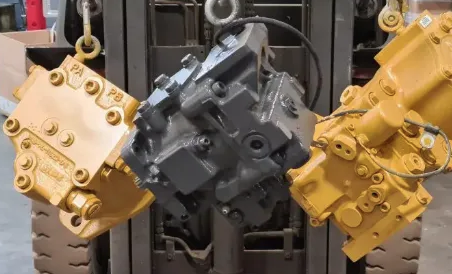
Heading down the repair rather than replacement route for your business’s hydraulic pump can be beneficial in minimising upkeep costs, reducing downtime, preventing major failures, extending equipment life and keeping consistency throughout your tools. This post will discuss the finer details of the benefits of hydraulic pump repairs…
What Is a Hydraulic Pump?
In simple terms, a hydraulic pump is a mechanical device that converts mechanical power created by a form of engine into hydraulic energy that encompasses fluid flow or pressure. This process is a clean and powerful way of powering and controlling machinery. It works by creating an internal vacuum that draws fluid in before delivering it through an enclosed system, which, in turn, builds up pressure in the system that will be strong enough to operate cylinders and motors.
Hydraulic pumps and hydraulic-powered machinery create stable and powerful mechanical action with impressive lifting capabilities.
The Importance of Hydraulic Pumps
Hydraulic pumps act as the heart of any hydraulic system and are the crucial component for converting mechanical power into powerful fluid power. Hydraulic systems are highly versatile across multiple sectors and are used in everything from heavy excavation equipment to general manufacturing and precision aerospace builds.
These benefits are achieved in a highly controllable and efficient method, often boasting better efficiency rates than electrical alternatives. As their control systems are closed off to retain fluid, there is also less chance of contaminants entering the stream and causing problems.

Five Benefits of Hydraulic Pump Repairs
There are numerous benefits to hydraulic pumps and the different methods of their upkeep. Here are the five key benefits of hydraulic pump repairs.
1. Reduced Downtime
Choosing to repair systems when they break down or begin to wear out reduces overall downtime far more than a simple replacement. Replacing machinery means waiting around for anywhere from a few days to over a month, and then more time will need to be spent installing, adapting and learning the new unit. Repairs can often be done far more quickly, leading to fewer disruptions to workflow.
2. Business Cost Savings
Opting for a hydraulic pump repair will more often than not provide significant long-term cost savings compared to replacing the entire unit. Repairs typically require fewer parts, reducing upfront expenses and timely maintenance prevents major system failures, minimising downtime and lost productivity. Over time, investing in repairs extends the lifespan of existing equipment, allowing businesses to maximise their machinery’s value while avoiding the higher costs associated with full replacements.
3. Extend Lifespan
Regular hydraulic pump repairs help extend the lifespan of machinery and its components. Addressing wear and tear early prevents minor issues from escalating into major failures that can shorten equipment life. By maintaining optimal performance, repairs reduce stress on connected parts, improving overall system efficiency. Consistent upkeep ensures machinery operates reliably for longer, delaying the need for more costly replacements and maximising your initial return on investment.
4. Improve Machinery Efficiency
Repairing a hydraulic pump once its efficiency levels are noticeably reduced is a great way to maintain efficiency, both from the rest of its components and in the workplace. As one component begins to fail, others around it will start to feel the pressure; this will not only have the potential to cause other problems but will also lower productivity.
5. Safety and Compliance
Being sure to repair parts in a hydraulic pump and its associated systems is important for maintaining a safe working environment. For instance, a mechanic’s car lift will use hydraulic pumps, and if they fail at holding the weight of a vehicle, the accident could be catastrophic. Ensuring repairs are made, tested and recorded will also keep you compliant with both internal and external health and safety checks.
When To Get a Hydraulic Pump Repair
Hydraulic pumps are critical components for continuous machinery performance, and timely repairs can prevent costly downtime. Knowing when to address issues as they arise is key. Common signs that a hydraulic pump may need repair include:
– Unusual Noises: Grinding, whining or knocking sounds during operation can indicate internal wear or cavitation
– Reduced Performance: Slow or inconsistent movement in hydraulic systems often points to pump inefficiency
– Fluid Leaks: Visible leaks around the pump housing or fittings can signal worn seals or damaged components
– Overheating: Excessive heat in the hydraulic system may indicate friction, pressure issues or pump failure
– Pressure Fluctuations: Inconsistent system pressure or failure to maintain pressure often reflects internal pump damage
– Contaminated Fluid: Debris or metal particles in hydraulic fluid suggest internal wear that requires inspection
Addressing these issues promptly will extend equipment life and prevent more extensive, costly repairs.
Choosing a Hydraulic Repair Company
Like with any tool, technology or piece of machinery, after a while, noises, leakages and anything else in between are sure to occur. Once you can identify the best moment to conduct repairs to your hydraulic pump, the next step is to know how to choose the right company for the job.
The key aspects to look for when making this decision are their experience, their repair warranty, any accreditations, customer reviews and if they offer any extra services.


