Delta Registered Installers, Total Specialist Maintenance Ltd (TSM) were appointed by Kilnbridge Structures Ltd on an exciting development, in Mayfair, London. The 10-storey structure will occupy the southern end of Berkeley Square, offering 225,000 square feet of premium office space and 14,000 square feet of retail and dining at ground level.
The project scope was to design, specify and install waterproofing protection systems to B2 (double height) and B1 basement levels to house plant rooms, amenities, and critical infrastructure.
Managing groundwater and ensuring long-term structural integrity are essential challenges with subterranean structures. Waterproofing and retrofitting solutions are vital for protecting structures and maintaining their value. Poor waterproofing, from design to installation, can lead to numerous issues.
Whether designing a waterproofing solution for new build or retrofitting, it is essential that waterproofing designs conform to BS 8102:2022, the Code of Practice for protecting below-ground structures against water ingress.
In designing habitable spaces, employing a combination of two waterproofing systems, known as combination protection, is preferred. These systems should have different performance traits to avoid common cause failures.
The specification and installation of waterproofing protection depend on the structure, ground conditions, and intended structure’s use. Continuity and compatibility of protection types are critical to minimise risks and avoid remedial measures.
TSM were further required to prioritise environmental considerations, including a low-waste installation process, non-destructive waterproofing methods, preservation of structural elements, full maintainability, extended service life, reduced material usage, and non-toxic membrane materials for safe use in occupied buildings.
Methodology
There is no universal solution for waterproofing design. Delta’s Technical Team addressed specific site challenges before recommending a robust waterproofing solution.
The project was split into four phases:
- Lift Pits and Basement Slab – (Type A Barrier Protection). Type A waterproofing, as defined by BS 8102:2022, involves applying a waterproof membrane or coating to a structure’s surfaces. This method, known as ‘barrier protection’ or ‘tanking’, is essential for keeping basements, tunnels, and underground structures dry by preventing water ingress.
- Structurally Integral Protection (Type B waterproofing), as defined by BS 8102:2022, involves designing the building structure, usually reinforced concrete, to be inherently watertight and resist groundwater ingress. This method relies on high-quality concrete, specialised joint sealants, and expert construction to prevent leaks.
Integral waterproofing (admixtures) protects concrete from within and can extend the lifespan of the concrete through protecting the reinforcement from oxidation.
- External & internal plenum areas that required a post applied (Type A Barrier Protection).
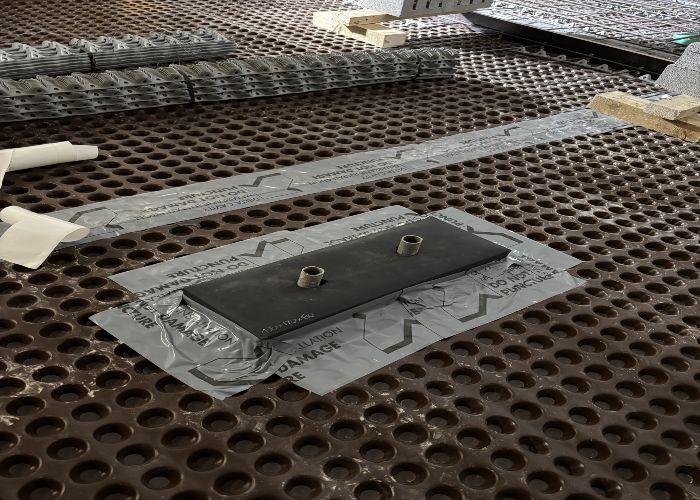
- Cavity Drained Protection (Type C waterproofing), as defined in BS 8012:2022. A ‘Type C’ Waterproofing System is a maintainable waterproofing solution for new-build basements, refurbishment and retrofit projects. The Type C System comprises of two key components, a Cavity Drainage Membrane (CDM) and Basement Drainage System.
Delta Amphibia is a Type A Barrier Protection System featuring a durable, flexible, pre-applied membrane. This EPDM waterproof membrane, available in two widths, reacts with water, self-repairs, seals, and fastens to concrete. It ensures total water tightness for underground structures, using a calibrated non-woven fabric to adhere mechanically to fresh concrete.
Seepage at the wall-floor junction in lift pit construction is common due to high adjacent ground levels. Delta Amphibia was used pre- applied for lift pit construction and extending under the proposed new basement slab. Koster NB1 was used for detailing. Delta Amphibia was sealed with waterproof swellable mastic AKTI–VO 201.
Type B waterproofing is ideal for new construction and can be combined with Type A or C systems.
Construction joints and penetrations require special attention, often using hydrophilic strips, water stops, or injectable hoses. Combining Type A external membranes with waterproof concrete creates a bonded system, preferred by warranty providers to prevent water migration.
Basement light-wells are prone to groundwater and rainwater infiltration due to their earth-retaining nature. Waterproofing the structure with Koster NB 1, which handles both negative and positive pressure, effectively mitigated this risk.
Delta’s waterproofing design team recommended Koster NB 4000 for waterproofing the 20 termination areas up to ground level. Koster NB 4000, a primary waterproofer in a Type A barrier protection approach, was chosen for its crack-bridging ability up to 4mm. Reinforcement fabric was added between coats for extra strength and durability against potential cracks and defects.
A ‘Type C’ Waterproofing System was selected as a maintainable waterproofing solution to ensure a Grade 3 habitable environment was achieved.
A Delta Type C, waterproofing system was considered the most reliable, sustainable and maintainable approach to the project. In principle a cavity drained waterproofing solution allows moisture or running water to travel behind the membrane within a controlled drainage system. A cavity drained system requires minimal preparation and disturbance to an existing substrate.
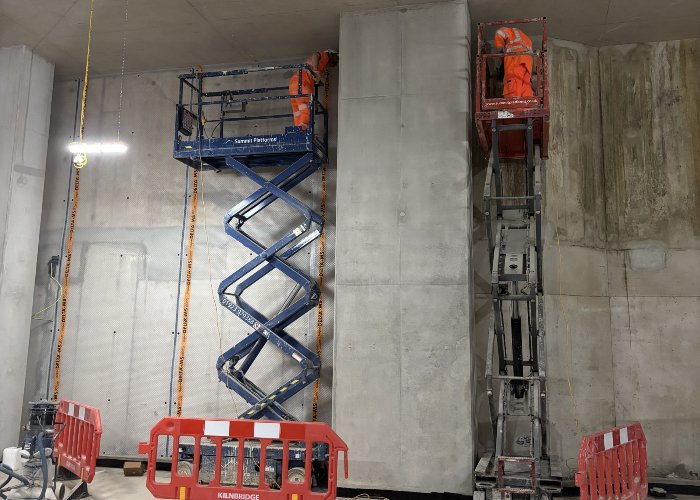
The installation of the Type C system posed project-specific challenges. These included installing membranes at high-level in the double-height B2 basement, handling structural complexities with multiple interfaces, and managing a tight schedule to avoid disrupting other trades. Additionally, the client required a solution for long-term maintainability, allowing future drainage access without impacting the building operations.
Construction joints, kickers, penetrations, insulation interfaces, and transitions between wall and floor systems are considered critical weak points for waterproofing systems. These were meticulously detailed before the Delta Type C System installation.

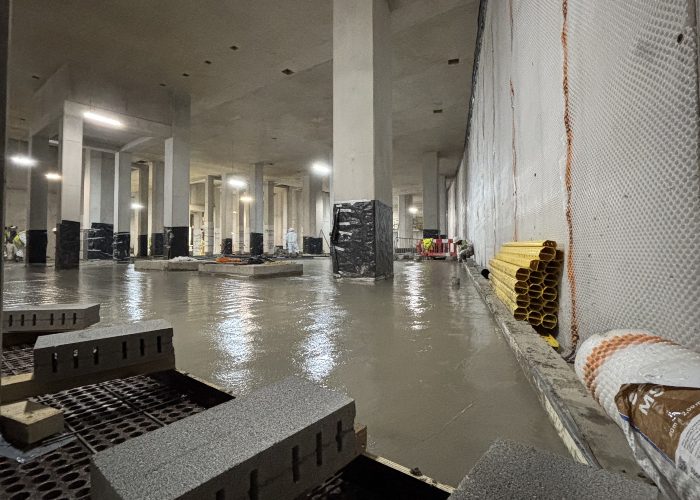
Perimeter drainage channels were sat on the slab on the basement floor, allowing for suitable drainage of any water ingress being diverted to suitable discharge points. Proper maintenance of drainage channels, sumps/pumps, battery backups, and monitoring systems is crucial for the long-term success of a Type C System.
The standard spacing of inspection/access ports in a Type C waterproofing system varies by construction type, depth, and risk attitude. Typically, ports are placed every 6 – 8 liner meters or at major direction changes. They should be conveniently located for access and maintenance throughout the structure’s lifespan.
Delta‘s waterproofing design team recommended integrating the Delta Bespoke Sump Pump range for efficient groundwater removal in case of structural defects. Manufactured in the UK, these pumps withstand hydrostatic forces in tough environments.
The units were strategically located and installed by main contractors under Delta’s supervision. Early incorporation facilitated better project collaboration and documentation, ensuring effective decision-making.
The principles of the Type C cavity drain system were straightforward and typical for a multi-level basement. The double-height design of Level B2 required precise installation of the Delta MS 500 membranes using mobile access equipment. TSM operatives followed strict safety protocols to maintain productivity and ensure safety.
After the Type C System was installed the all-important integrity testing was undertaken to exercise the waterproofing system in worst case scenario.
Products Used
- Delta MS 500
- Delta MS 20
- Perimeter Drainage Channel
- Delta Cornerstrip
- Delta Access Ports
- X4 Bespoke Groundwater Chambers sized suitably by Delta’s Pump Teams
- Xypex Waterproof Concrete
- Koster NB 1
- Koster NB 4000
- Delta Amphibia
- Delta Epoxy
- Koster KB-Pox Adhesive
- Koster Joint Tape
Case Study Results
Delivered on time and to a tight schedule. Daily coordination with main contractors ensured all works progressed smoothly, showcasing TSM’s capability to handle specialist projects without delays. With environmental considerations and sustainability prioritised to ensure the waterproofing design aligned with the overall project.