For decades, success in construction has often been measured by scale. Bigger developments, larger buildings and longer project pipelines have traditionally defined growth across the industry.
Yet a different conversation is now beginning to emerge.
Across the UK and internationally, developers are facing a combination of pressures that few could have predicted a decade ago. Rising construction costs, labour shortages, planning constraints, infrastructure limitations and changing customer expectations are forcing the sector to reconsider some of its most established assumptions.
The challenge is no longer simply how to build more.
Increasingly, the question is how to build smarter.
This shift is helping drive interest in modular construction and Modern Methods of Construction (MMC), not as alternative building techniques, but as practical responses to a changing market environment.

In many industries, technological advancement has fundamentally changed how products are designed, manufactured and delivered. Automotive production, consumer electronics and logistics have all undergone significant transformation through standardisation, automation and factory-based processes.
Construction is now beginning to experience a similar transition.
Off-site construction enables large portions of a development project to be completed in a controlled manufacturing environment before arriving on-site. This can improve quality control, reduce programme risk and shorten delivery timelines. More importantly, it allows developers to think differently about how projects are planned, phased and deployed.
For landowners and developers, flexibility is becoming increasingly valuable.
Sites that may once have been considered difficult to activate can now be brought into productive use more quickly. Hospitality operators can test new locations without committing to lengthy construction programmes. Developers can phase projects according to market demand rather than waiting years for completion.
The implications extend beyond speed.
As sustainability targets become more ambitious and resource efficiency becomes increasingly important, construction innovation is no longer simply a competitive advantage. It is becoming a business necessity.
Companies such as Capsule Whales believe that the next chapter of development will be defined not only by what is built, but by how it is delivered.
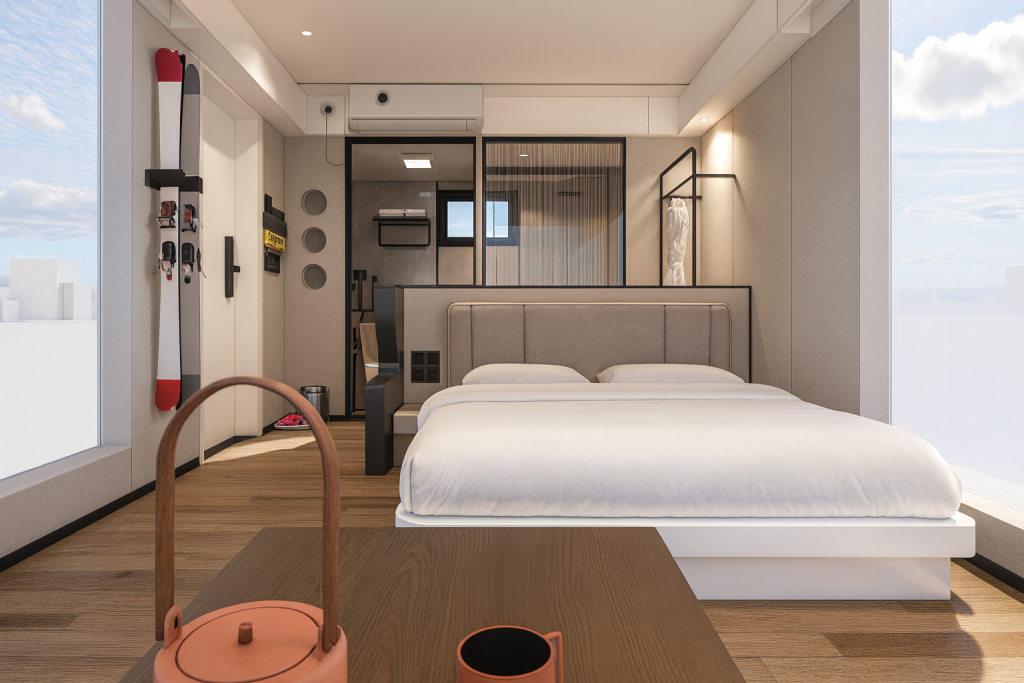
The company’s modular accommodation solutions have been designed around a simple principle: reducing complexity while increasing flexibility. By combining factory-built construction with modern design and off-grid capability, the objective is to create solutions that allow land, infrastructure and investment opportunities to be utilised more effectively.
This is not a prediction that traditional construction will disappear.
Rather, it reflects a growing recognition that different development challenges require different approaches.

As developers, architects and contractors continue to adapt to new economic realities, modular construction is likely to become an increasingly important part of the development landscape.
The future of construction may not belong to those who simply build more.
It may belong to those who find better ways to build.