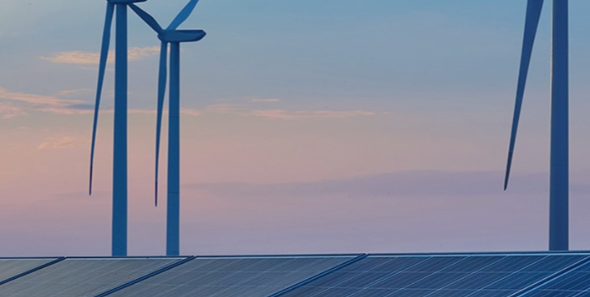
Electricity networks are being pushed into unfamiliar territory. With the energy transition rolling out at pace and the impacts of climate change already having a real-world impact, the UK’s ageing power infrastructure is being pushed to its limits.
Operators are rethinking how they monitor, manage, and protect the grid and Jonathan Lewin, Head of HV Monitoring at EA Technology is a firm believer that the grid can benefit significantly from a faster move towards digital maintenance and monitoring.
He’s confident that the next 12 months will be all about modernising grid maintenance and has outlined what he expects to be the biggest drivers for much-needed change in 2026…

Renewables and our ageing infrastructure
The renewable revolution is well and truly underway. Offshore wind and solar farms are becoming more and more common, and adoption rates for low carbon technologies such as electric cars (EVs), heat pumps and solar panels are on the rise.
Progress with decarbonisation is to be celebrated, but this is consequently adding vast amounts of clean energy to the grid in places that weren’t designed to cope with this volume of power. It’s no secret the UK’s infrastructure was built decades ago in an era when power generations were far simpler. Now, the higher network load brought on by this new wave of distributed energy generation is putting more strain on our ageing infrastructure.
We’re dealing with a more complex network, and 2026 will see power system operators proactively looking to strengthen their more traditional inspection cycles in response to the bidirectional power flows we are familiar with from low carbon technologies.
Heat-related stress
Our ageing network infrastructure isn’t just a hindrance to harnessing renewable energy, it also makes us more susceptible to power outages as the result of climate change. Climate-driven extremes, particularly heatwaves, will cause more accelerated insulation ageing and thermal overload, especially in cables and transformers. This will become especially prevalent across the warmer climates in Europe.
The threat of climate-related outages will force operators to bolster their resilience planning, with grid-edge voltage and network monitoring, such as partial discharge detection, becoming more commonplace – not just in the UK, but across Europe as well.
Digital maintenance
All of these grid stressors will push operators towards a more dynamic, data-led approach to network management, led largely by the implementation of grid-edge intelligence technology. This technology allows for continuous online condition monitoring, predictive analytics, and automated maintenance decision-support systems – all essential for maintaining network reliability in such a complex network environment.
With this approach, common maintenance issues like sub-surface cable deterioration and low-level partial discharge can be caught more reliably. These are issues that remain underestimated but are becoming increasingly impactful on the UK’s ageing networks.
To roll-out this approach successfully, power system operators will need to avoid data-quality issues. An inconsistency in condition records or siloed monitoring systems may quietly undermine the effectiveness of digital maintenance strategies, and we can expect to see operators plug any data gaps to modernise their maintenance strategy.
Conclusion – operators towards a consistent approach to network maintenance
Maintenance modernisation is at the heart of 2026. Climate change, renewable energy and outdated infrastructure are all driving operators towards a more modern, flexible and consistent approach to network maintenance. The good news is the technology already exists to bring network maintenance into the 21st century. Now, it’s simply a case of putting that technology into practice.
EA Technology is a global, independent provider of end-to-end power engineering solutions, supporting customers in managing and operating electrical assets reliably, safely and efficiently. Recognised as a world-leading expert in its field, we work collaboratively with partners across the energy, utilities, infrastructure and associated sectors.