Most homeowners spend weeks choosing the right bath. They compare shapes, depths, and taps, then give barely a second thought to the panel that finishes it off. Yet the bath panel is one of the most-touched, most-looked-at parts of any bathroom. It shapes the room’s appearance, takes the brunt of daily knocks, and determines how easy the space is to keep clean. Two materials dominate the UK market: MDF and acrylic. Both can look excellent. Both can last for years. But they behave quite differently once a bathroom is in daily use, and the right choice often comes down to how your household actually lives, not which material sounds more premium on paper.
What Does a Bath Panel Actually Do?
A bath panel isn’t just decorative trim. It conceals the pipework, waste, and structural framework beneath the bath, giving the installation a finished, professional appearance. Without it, even an expensive bath looks unfinished and the plumbing underneath is left exposed to dust, damp, and accidental damage.
A well-fitted panel also protects the underside of the bath from knocks, supports access for future plumbing repairs, and ties the whole suite together visually. Many homeowners only notice their panel when something goes wrong with it, a sign of swelling, a crack, or a colour mismatch, which is exactly why it deserves more attention at the planning stage.
Understanding MDF Bath Panels
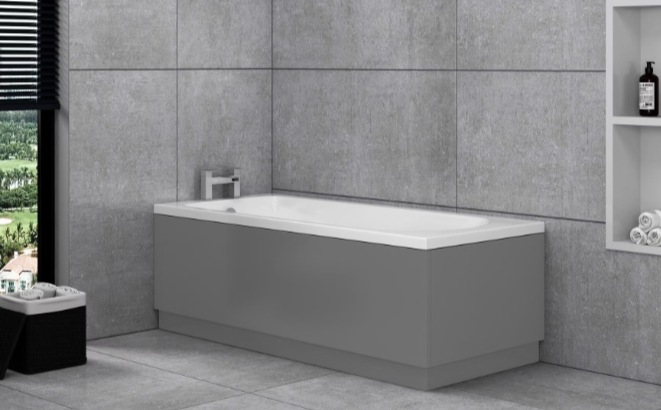
MDF bath panels are made from compressed wood fibres, then finished with a waterproof coating, laminate, or painted surface. This construction gives them a solid, furniture-like feel rather than the lighter plastic impression some materials give off.
Because MDF can be shaped, painted, and finished in a wide range of styles, it’s often chosen by homeowners who want their bath panel to look like a genuine piece of bathroom furniture rather than a functional cover. Matt finishes, wood-effect panels, and painted shaker-style designs are common, and many ranges of baths with MDF panels are designed specifically to complement fitted bathroom furniture, vanity units, and storage.
The rigidity of MDF also means it tends to feel sturdier underfoot when used as a side panel near a walk-in shower-bath combination, with less flex than thinner acrylic alternatives.
Understanding Acrylic Bath Panels
Acrylic bath panels are lightweight, moulded plastic panels with a smooth, glossy finish. They’re widely used across the UK because they’re easy to install, simple to cut to size, and pair naturally with acrylic baths themselves, creating a seamless, uniform look.
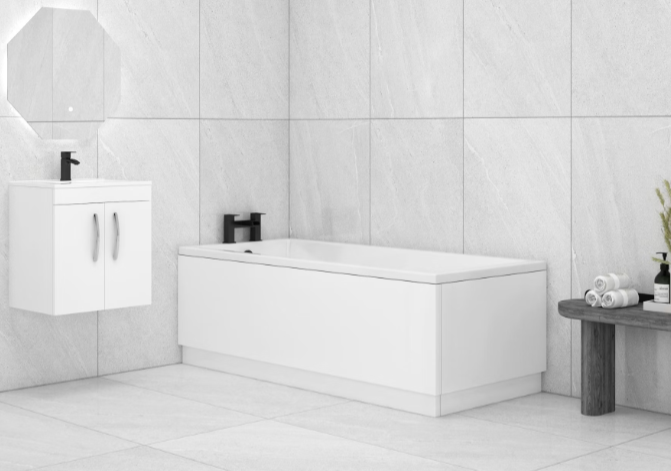
Acrylic’s popularity comes from its practicality. It’s resistant to surface moisture, simple to wipe clean, and available in straightforward white or coloured finishes that suit most contemporary bathrooms. Many baths with acrylic panels are sold as complete sets, which appeals to landlords, developers, and anyone wanting a fuss-free installation without coordinating separate finishes.
Appearance and Style – Which Material Looks Better?
This is where personal taste plays the biggest role. MDF panels tend to suit bathrooms with a furniture-led, boutique, or hotel-style aesthetic. Painted or wood-effect finishes integrate well with vanity units, shaker-style cabinetry, and warmer colour palettes.
Acrylic panels suit a cleaner, more minimal look. The glossy, uniform surface works particularly well in modern bathrooms with simple lines, chrome fittings, and a crisp white colour scheme. Acrylic also tends to look more “fitted” when paired with an acrylic bath, since the materials match seamlessly rather than appearing as two distinct surfaces.
Neither is automatically better. A furniture-style family bathroom benefits from MDF’s character, while a sleek ensuite or modern bathroom design often looks more cohesive with acrylic throughout.
Everyday Cleaning and Maintenance
For day-to-day practicality, acrylic generally has the edge. Its smooth, non-porous surface wipes clean easily with a standard bathroom spray, and it doesn’t absorb moisture from condensation or splashes. For households where the bathroom gets heavy daily use, mornings before school, evening showers, multiple family members, this low-maintenance quality matters.
MDF panels, when properly sealed and finished, are also easy to clean, but they’re more sensitive to standing water or prolonged damp contact at exposed edges. Homeowners researching the wider advantages and disadvantages of MDF should also consider how the material behaves under different environmental conditions before choosing a bath panel solution.
In a busy UK family bathroom, where bath time often means rushed routines rather than careful drying, acrylic’s forgiving nature can reduce the small daily maintenance tasks that build up over time.
Durability in Real-Life Bathrooms
Real-world durability depends heavily on how a bathroom is used, not just the material itself. MDF panels are dense and resistant to accidental knocks; a dropped shampoo bottle or toy is unlikely to leave a mark. However, MDF is more vulnerable to long-term moisture exposure if the protective coating is damaged or if sealing wasn’t done properly during installation.
Acrylic panels handle moisture well throughout their lifespan, but their lighter, more flexible structure means they can show stress marks or flex slightly under firm pressure, such as a child leaning or stepping on the panel edge.
In both cases, quality of installation plays a major role. A poorly sealed MDF panel will struggle in a humid bathroom, just as a poorly supported acrylic panel can crack under pressure. Neither material is flawless, and both reward careful fitting and basic care.
Which Option Works Better for Family Bathrooms?
For households with children, shared bathrooms, and frequent use, practicality usually wins. Acrylic’s moisture resistance and easy cleaning suit the unpredictable nature of family bath time, splashes, spills, and the occasional bath toy left soaking against the panel.
That said, MDF can still work well in family bathrooms if the panel is well-sealed and the household is reasonably attentive to drying surfaces after use. Many parents prefer the warmer, less clinical appearance MDF brings to a space used multiple times a day.
The deciding factor is usually maintenance habits rather than household size. A diligent family may get excellent long-term results from MDF, while a more relaxed routine may benefit from acrylic’s lower-maintenance nature.
Which Option Works Better for Design-Focused Bathrooms?
For homeowners renovating with aesthetics as a priority, MDF often has the advantage. Its ability to be painted, shaped, and finished to match cabinetry makes it a natural fit for premium or boutique-style bathrooms, especially where a coordinated, furniture-inspired scheme is the goal.
Acrylic, meanwhile, suits design-focused bathrooms with a more streamlined, contemporary feel. Combined with shower baths or straight baths in matching acrylic, it creates a seamless, considered look without visual interruption between bath and panel.
Ultimately, the design goal should guide the decision; furniture-style warmth points toward MDF, while clean-lined consistency points toward acrylic.
Cost vs Long-Term Value
Rather than focusing on specific price points, it’s more useful to think about long-term value. MDF panels often involve a slightly higher upfront cost, reflecting the finish quality and furniture-style appearance, but their performance over time depends heavily on maintenance and sealing.
Acrylic panels tend to be more cost-effective initially and require less ongoing care, making them appealing for landlords and developers focused on durability with minimal upkeep. However, acrylic’s appearance, while practical, may not deliver the same premium feel some homeowners want from a finished bathroom.
Value, in this context, isn’t just about price. It’s about how well the panel continues to perform and look good several years after installation, and that depends as much on bathroom conditions as on the material itself.
Common Misconceptions About MDF and Acrylic Bath Panels
A common myth is that MDF always swells in bathrooms. In reality, this typically only happens when panels are poorly sealed, damaged, or repeatedly exposed to standing water without proper care. Quality MDF panels with intact waterproof coatings can perform reliably for years.
Another misconception is that acrylic always feels cheap. While early acrylic products may have earned this reputation, modern acrylic bath panels are manufactured to higher standards, offering a clean, durable finish that suits a wide range of bathroom styles, not just budget installations.
Finally, many assume one material universally outperforms the other. In truth, suitability depends entirely on the bathroom’s usage patterns, design goals, and maintenance habits, not a fixed hierarchy between the two.
So Which One Works Better in Everyday Life?
There’s no single correct answer, only the right fit for your bathroom and lifestyle.
MDF may suit homeowners who prioritise a premium, furniture-style appearance, a coordinated bathroom aesthetic with cabinetry and storage, and a willingness to maintain proper sealing and care.
Acrylic may suit homeowners who prioritise simplicity and ease of cleaning, low-maintenance, practical ownership, and a seamless match with acrylic bath designs.
Family bathrooms with heavy daily use often lean toward acrylic’s forgiving nature, while design-led renovations often lean toward MDF’s character and finish options.
Conclusion
Both MDF and acrylic bath panels can perform brilliantly in the right setting. MDF brings warmth, character, and a furniture-inspired finish that suits design-focused renovations, while acrylic offers practicality, moisture resistance, and low-maintenance living that suits busy family bathrooms.
The smartest decision isn’t about choosing the “better” material in absolute terms, it’s about matching the panel to how your bathroom is actually used day to day. Consider your household’s habits, your design priorities, and your appetite for maintenance before deciding. Get that match right, and either material can deliver years of reliable, good-looking performance long after the renovation dust has settled.