In an industry where margins are under constant pressure, the efficiency of every process on site matters. Paint application may not seem the most obvious area for productivity gains, but it is one of the most labour-intensive finishing tasks and a common source of waste. For contractors, getting this stage right can make a measurable difference to both project timelines and profitability.
This is where modern spray equipment has come into its own. Advances in spray technology have transformed the way contractors apply coatings, enabling faster, more consistent finishes with less product waste. But achieving those gains isn’t simply a matter of swapping a roller for a sprayer. It requires understanding the equipment, planning for efficiency and maintaining it properly.
From manual to mechanical: the time equation
Traditional brush and roller application is slow, uneven across large areas and heavily reliant on individual skill. On a typical project, this can mean extra days of labour, extended scaffold hire, and disruption to other trades.
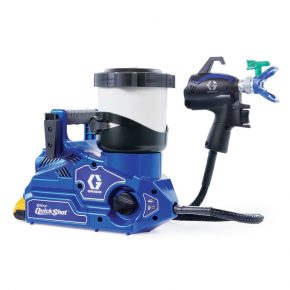
By contrast, modern spray systems offer a faster, more consistent finish with less waste. Compact cordless units such as the Graco Ultra QuickShot allow contractors to work efficiently on small to medium jobs without the setup time of larger sprayers. The precision control and portability of this type of tool make it ideal for detail work, touch-ups, or completing multiple rooms in a single day.

Across larger projects, airless and HVLP systems can cover up to ten times the area in the same amount of time, while delivering a more uniform finish. This speed directly translates into lower labour costs and faster project turnover. Contractors who adopt spraying often find they can reallocate skilled painters to more detailed finishing tasks, optimising how labour is used across the site.
Controlling waste through precision and preparation
Material waste remains one of the silent drains on project profitability. Over-application, poor surface preparation and inefficient equipment can all result in wasted paint and unnecessary expense. Modern spray equipment helps counter this through precision.
Using the correct spray tip size and pressure for the coating being applied ensures optimal atomisation, reducing overspray and wasted product. Many contractors underestimate how much a worn spray tip can impact material use. A tip that has lost just 10% of its edge can increase paint consumption by as much as 30%. Regular inspection and replacement of tips should therefore be part of any efficiency plan.
Preparation is equally important. Correctly mixed coatings not only perform better but also reduce the need for rework. Inconsistent mixing can lead to colour variation or adhesion issues that require costly touch-ups. Taking the time to mix properly, strain materials, and test on a small section before full application can eliminate these problems.
Equipment maintenance
Spray systems represent a significant investment for any contractor, but with proper maintenance they can deliver many years of reliable service. The key is routine care. Cleaning equipment thoroughly after every use prevents dried coatings from clogging filters and lines, which can cause uneven spray patterns or premature pump wear. Regular servicing and correct storage, particularly over the winter months, also extend equipment life and reduce costly downtime.
For contractors who do not spray year-round, equipment hire can be an efficient alternative. Hire services provide access to high-spec, well-maintained equipment without the capital outlay or maintenance burden. This is particularly useful for larger or occasional projects where specific systems are needed for short periods.
Training and technique
Even the best equipment cannot overcome poor technique. Proper training is essential for safe, efficient spraying. Operators who understand how to set up and use their sprayers correctly will achieve better coverage with less waste, and they’ll spend less time correcting errors.
Many equipment suppliers, provide technical advice and training resources for contractors looking to upskill their teams. Investing a small amount of time in familiarisation sessions or refresher training can quickly repay itself in smoother workflows and higher-quality results.
Technique also matters on site. Maintaining a consistent distance and angle from the surface, overlapping each pass by around fifty per cent, and keeping a steady pace all contribute to an even coat and minimal overspray. These small details make the difference between an average finish and a professional one.
Sustainability through efficiency
Sustainability has become a key focus across construction and efficiency in paint application directly supports that goal. Reducing waste means fewer materials manufactured, transported, and disposed of. Efficient spraying also lowers energy use on site by shortening project timelines and drying times. For contractors aiming to meet environmental targets or win public-sector tenders, demonstrating these operational efficiencies can be a valuable differentiator.