Something has shifted in UK heritage property development, and it’s showing up first in the kitchen. For the best part of a decade, heritage property developers, period conversion projects and premium refurbishments defaulted to modern kitchen design. The commercial logic seemed clear at the time. Modern reads as aspirational. Modern shows well in photography. Modern signals investment in the property.
That logic is quietly being reconsidered. Heritage property developers across the UK are increasingly choosing classic kitchen design, and the plots that get it right are moving faster at asking price than equivalent plots that took the modern route.
The commercial reality is worth understanding, whether you’re a heritage property developer, a specifier working on a period conversion, an architect on a listed building project, or a kitchen designer supplying into the heritage residential market.
What’s actually changing
The heritage property buyer has moved on. Buyers approaching Georgian townhouse conversions, Victorian refurbishments, Edwardian family home renovations and rural period developments arrive with different expectations from buyers a decade ago. They’re not looking for a modern kitchen dropped into a period property. They’re looking for a kitchen that respects the property.
The shift reflects a broader cultural move. UK residential buyers, particularly at the premium and mid-market heritage segments, increasingly value material continuity across the whole house. A well-designed modern kitchen can work beautifully in a period property if the design thinking is right, but a fad-driven modern kitchen dropped into a Georgian townhouse increasingly reads as jarring rather than aspirational. A well-designed classic kitchen, done properly, reads as considered and appropriate.
The distinction that matters isn’t modern versus classic. It’s timeless design versus fad-driven design. Both classic and modern can be timeless when the design work is done properly, and both can date fast when it isn’t.
Why classic design is winning in heritage properties
Three factors are shaping the commercial outcome specifically for heritage properties.
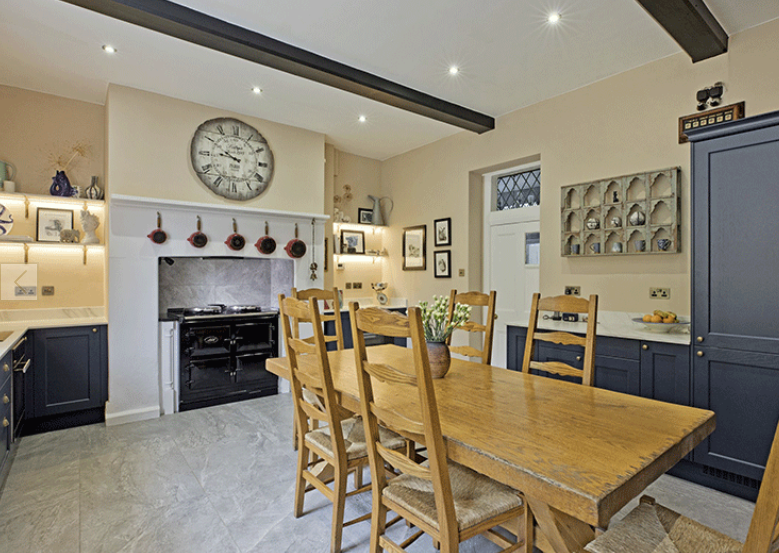
The first is material continuity. Classic cabinetry, in solid timber or painted finish, sits well against period architectural detail. In-frame effect doors, which give the visual character of traditional in-frame construction at a more accessible price point, work particularly well in period properties where the visual language of the wider house calls for that considered cabinetry look. The material conversation between kitchen and heritage property matters more than it does in a new-build.
The second is buyer perception. Heritage property buyers increasingly recognise a well-chosen classic kitchen as the marker of a serious development. A developer who has chosen classic cabinetry, proper pantry provision, natural stone worktops and a heritage-appropriate colour has signalled genuine engagement with the property.
The third is longevity through timeless design. Timeless design outlasts fad-driven design regardless of style. In the heritage property context, classic and skinny Shaker designs tend to carry that timelessness particularly well because they connect visually to the wider architectural language of the property. The heritage property owner buying a period home with a properly designed classic or skinny Shaker kitchen expects the kitchen to hold value across the whole time they own the property.
Cassie Jones, Brand Manager at Masterclass Kitchens, said: “The heritage property conversation has genuinely shifted. When we work with developers on period conversions or heritage refurbishments, the questions we’re asked have moved from ‘what design fits the budget’ to ‘what design respects the property’. Developers who engage with the design conversation properly at the outset tend to see better commercial outcomes than developers who default to the same standard specification they’d use on a new-build.”
The design decisions actually shaping heritage development
- In-frame effect cabinetry. In-frame effect doors, where the door presents the visual character of traditional in-frame construction, sit well against period architectural detail without the £60,000+ price point that true in-frame construction typically carries. Masterclass Kitchens’ Hawksmoor and Clifton ranges reflect this design thinking, giving developers proper in-frame character at a workable heritage development price point.
- Painted finish over factory colour. Classic kitchens benefit from a painted finish in heritage-appropriate colour palettes, including deep greens, inky blues, warm creams and heritage neutrals. The colour choice reflects the property’s period character rather than the current colour trend.
- Natural stone worktops. Classic kitchen design in heritage property increasingly favours natural stone, including marble, granite and limestone, over engineered stone. The material conversation between kitchen and heritage property benefits from natural stone.
- Pantry and larder provision. Heritage properties often accommodate pantry or larder provision that new-builds don’t. A classic kitchen with walk-in pantry, tall pantry cabinetry or built-in larder reads as appropriate to the property.
- Traditional handle detail. Classic kitchens benefit from traditional handle choices, including brass, aged pewter and wooden knobs. The hardware conversation matters more than it might in a new-build.
- Range cooker provision. Classic kitchen design in heritage property increasingly includes range cooker provision rather than integrated hob and oven. The range cooker signals the right heritage kitchen thinking.
What this means for heritage property development
Heritage property developers engaging with the classic kitchen conversation at the outset are seeing better commercial outcomes than developers defaulting to the same design language they’d apply to a new-build.
The decision requires proper engagement. A classic kitchen for a Georgian townhouse conversion isn’t the same as a classic kitchen for a Victorian family home refurbishment, which isn’t the same as a classic kitchen for a rural period property. Developers who engage with a UK bespoke kitchen manufacturer at the concept stage rather than at procurement tend to end up with kitchens that suit the property properly.
Cassie Jones said: “Early engagement matters. When we work with developers who bring us in at the concept stage, we can shape the kitchen around the property from the start. When we’re brought in at procurement, we’re working within decisions that were made without kitchen input, and the outcome is often less resolved than it should be. The heritage development pipeline rewards early conversation.”
The wider commercial picture
The classic kitchen shift in UK heritage property development reflects a broader UK residential market conversation. Buyers increasingly value material continuity, heritage appropriateness and timeless design over fad-driven aspiration. Heritage property developers who recognise this and choose classic kitchen design that genuinely respects the property produce plots that move faster at asking price than equivalent plots that got the design conversation wrong.
The classic kitchen isn’t a nostalgic choice. It’s a commercial decision reflecting how heritage property buyers are engaging with the current market. Developers who take the design conversation seriously at concept stage, with a UK kitchen manufacturer that can deliver classic ranges alongside skinny Shaker and modern where the wider portfolio requires it, produce the outcomes the current heritage market rewards.
The playbook for heritage property development has quietly rewritten itself. The developers, specifiers, architects and kitchen designers who engage with the classic kitchen conversation are the ones producing the commercial outcomes the UK heritage property market currently rewards.